Data Science and AI for Climate Change: Building a Sustainable Future
Current Advances in Biodiversity, Conservation and Environmental Sciences, Apple Academic Press, February 2027 · Est. 354 pp · ISBN: 978-1-77964-677-4
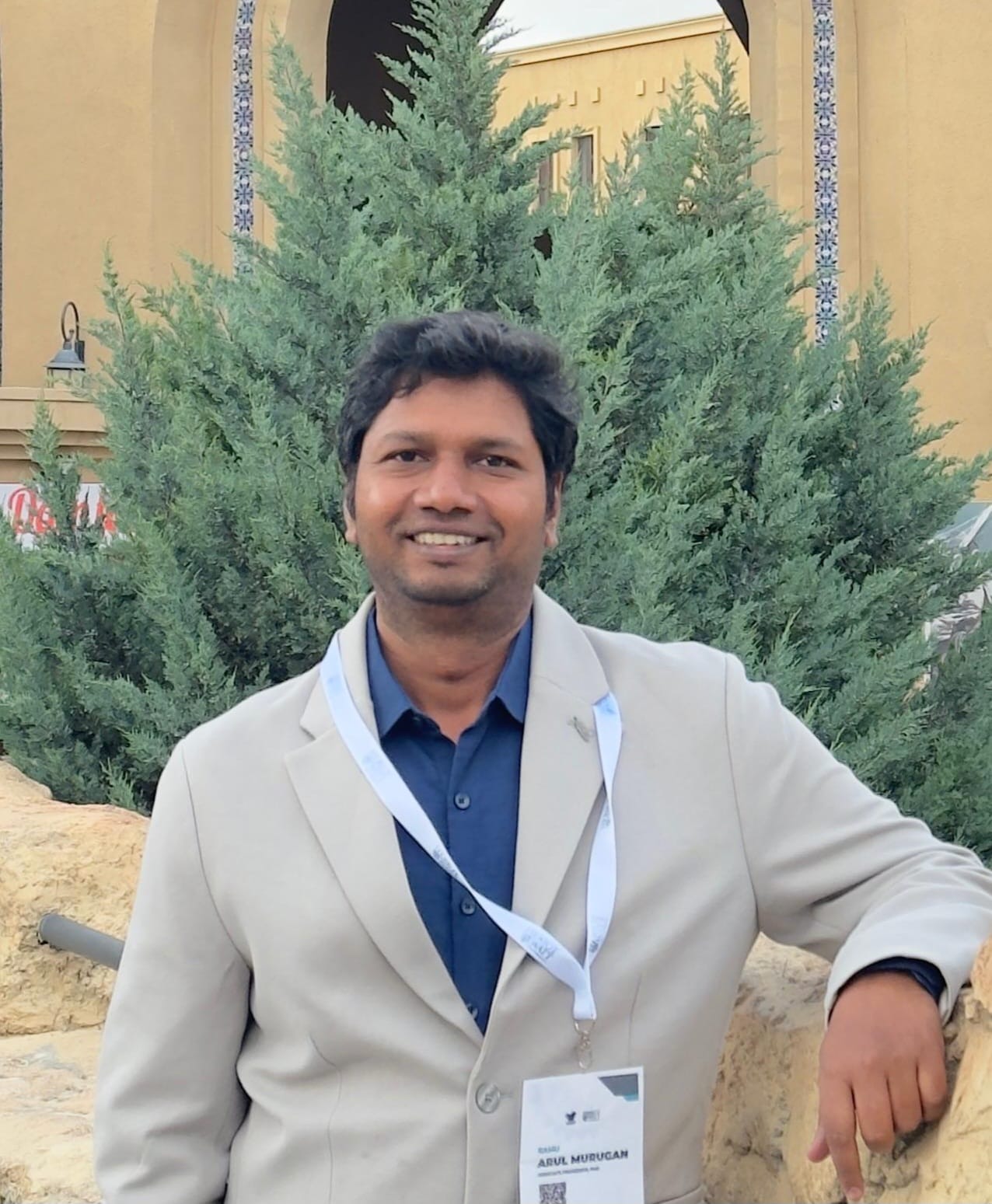
|
Department of Computational Science and Software Engineering
Heriot-Watt International Campus of K. Zhubanov Aktobe Regional University, Aktobe, Kazakhstan
I am an Associate Professor in the Department of Computational Science and Software Engineering at Heriot-Watt International Campus of K. Zhubanov Aktobe Regional University, Aktobe, Kazakhstan, specialising in Artificial Intelligence, Machine Learning, and Deep Learning. My research focuses on developing intelligent systems that solve real-world problems in healthcare, computer vision, and natural language understanding. I lead the AI & Intelligent Systems Lab and collaborate with international research groups across academia and industry.
My lab investigates foundational and applied problems in AI, with a focus on building systems that are accurate, interpretable, and clinically deployable.
Deep learning models for early detection and classification of diseases from MRI, CT, and X-ray images. Current focus on brain tumour segmentation and diabetic retinopathy grading.
Transformer-based models for text classification, sentiment analysis, and information extraction from biomedical literature and clinical notes.
Developing interpretability methods for black-box models to improve transparency and trust in AI-driven clinical decision support systems.
Privacy-preserving distributed machine learning frameworks enabling collaborative model training across hospitals and institutions without sharing raw patient data.
Object detection, semantic segmentation, and scene understanding for autonomous systems, surveillance, and remote sensing applications.
End-to-end intelligent systems for patient risk stratification, treatment recommendation, and clinical workflow optimisation in smart hospital environments.
Selected recent publications. See Google Scholar for the full list (125+ papers, 1,800+ citations). ↓ Download BibTeX
Current Advances in Biodiversity, Conservation and Environmental Sciences, Apple Academic Press, February 2027 · Est. 354 pp · ISBN: 978-1-77964-677-4
Chapter 10 in Strategic Planning and Adaptation of Resilient Agri-Food Systems in a Changing World, Denis Samygin & Vasilii Erokhin (Eds.), IGI Global Scientific Publishing, 2027 · 28 pp · ISBN: 979-8-3373-4987-9
Transforming Outcome-Based Education with Machine Learning, Springer Nature Singapore, 2026, pp. 29–60 · ISBN: 978-981-95-4925-2
EAI/Springer Innovations in Communication and Computing, Springer Cham, June 2026 · ISBN: 978-3-032-02979-9
Eng. Technol. Appl. Sci. Res. (ETASR), December 2026
International Journal of Computing, vol. 25, no. 3, pp. 585–593, September 2026
Scientific Reports, vol. 15, article 41208, 2025
Journal of Machine and Computing, vol. 4, no. 1, pp. 210–220, Jan. 2024
Journal of Biomedical and Sustainable Healthcare Applications, vol. 4, no. 1, pp. 054–062, Jan. 2024
Journal of Computing and Natural Science, vol. 3, no. 2, 2023
Intelligent Automation and Soft Computing, 2023
Mobile Networks and Applications, 2022
International Journal of Systems Assurance Engineering and Management, 2022
IGI Global, 1st ed., October 2018 · ISBN: 978-1-5225-7522-1
EAI/Springer Innovations in Communication and Computing, 1st ed., March 2019 · ISBN: 978-3-030-02674-5
IGI Global, September 2019 · ISBN: 978-1-5225-9750-6
Springer, 2019 · ISBN: 978-3-030-26013-2
Springer, 2020 · ISBN: 978-3-030-44407-5
Hardcover, January 2020 · ISBN: 978-81-950008-0-7
Computational Vision and Bio-Inspired Computing, Lecture Notes in Computational Vision and Biomechanics, Springer, February 2018 [Scopus]
Handbook of Research on Network Forensics and Analysis Techniques, IGI Global, March 2018 · ISBN: 978-1-5225-4100-4 [Scopus]
Social Network Analytics for Contemporary Business Organizations, IGI Global, April 2018 [Scopus]
Intelligent Multidimensional Data and Image Processing, IGI Global, June 2018, pp. 306–319 [Scopus]
Business Intelligence for Enterprise Internet of Things, Springer, June 2020 [Scopus]
Business Intelligence for Enterprise Internet of Things, Springer, June 2020 [Scopus]
Business Intelligence for Enterprise Internet of Things, Springer, June 2020 [Scopus]
New Trends in Computational Vision and Bio-Inspired Computing, Springer, June 2020 · ISBN: 978-3-030-41861-8 [Scopus]
Leveraging VANETs and Blockchain Technology for Urban Mobility, IGI Global, May 2025 [Scopus]
National Conference on Recent Trends in Information and Communication Technology, April 2012
International Conference on Advanced Computing (ICoAC), 2013
ICIIECS 2014
ICIIECS, March 2015
RTICT, March 2015
ICETSET '16, March 2016
National Conference on Open Data Sciences and Computing, March 2017
National Conference on Open Data Sciences and Computing, March 2017
International Joint Conferences on Advances in Engineering and Technology, May 2018
ICSSIT 2019, IEEE
ICSSIT 2019, IEEE
ICSSIT 2019, IEEE
ICSSIT 2019, IEEE
EAI BDCC 2019
ICSSIT 2019, IEEE
EAI BDCC, 2022
Courses I teach at the undergraduate and postgraduate level.
Guest-edited special issues in international journals.
The AI & Intelligent Systems Lab. We are always looking for motivated students and collaborators.
Former students who have graduated and moved on to great positions.
I am looking for self-motivated PhD and Masters students with a strong background in mathematics, programming (Python), and a passion for AI research. Research areas: Healthcare AI, Federated Learning, Computer Vision, NLP. If you are interested, please send your CV and a brief statement of research interests to arulmr@gmail.com.
Get in touchMost frequent co-authors across 125+ publications.
Invited lectures, keynote addresses, and conference presentations.
International Conference on Recent Trends in Technology (ICRTT 2026)
Serving as International Advisory / Technical Programming Committee Member at ICAEIA 2026.
Paper accepted in Engineering, Technology & Applied Science Research: "A Machine Learning-Based Recommendation System Using Content-Based Filtering Techniques".
For research collaborations, student enquiries, or speaking invitations, please reach out.
Open opportunities to collaborate, study, or consult.
I accept 1–2 PhD students per year in AI, ML, Deep Learning, and Healthcare AI. Funding opportunities available.
Apply for PhDInterested in co-authoring papers, sharing datasets, or running joint experiments? I welcome international academic collaborations.
Propose CollaborationI consult for organisations applying AI and Machine Learning to real-world challenges in healthcare, smart cities, and IoT.
Get in TouchA highlighted publication with plain-language context.
In plain English: This paper develops a new AI model that predicts city traffic patterns more accurately by combining both the physical layout of roads (spatial structure) and how traffic changes over time (temporal dynamics). Tested on real Bangalore traffic data — it outperforms existing methods.
Researchers I have supervised and mentored.
Pattern Recognition and Machine Learning
2024Researcher · Journal of Machine and Computing
ML for Adaptive Curriculum Design
2026Published · Springer Nature Singapore
Spatial-Temporal Traffic Prediction
2025Published · Scientific Reports, Nature
Key milestones across two decades of research.
Early Detection of Lung Cancer using Neural Networks — published in Lecture Notes in Computational Vision and Biomechanics.
Authored Computational Intelligence and Sustainable Systems and Computing and Communication Systems in Urban Development.
Edited Business Intelligence for Enterprise Internet of Things — Springer, with global co-editors.
Crossed 100 peer-reviewed publications spanning journals, books, and conference proceedings.
Traffic prediction paper published in Scientific Reports, cementing AI research at the international level.
Invited keynote speaker at the International Conference on Recent Trends in Technology — recognising global research leadership.
Hover a topic to explore — click to filter publications.
Under review / submitted manuscripts and early-stage research notes.
Research supported by international funding bodies and university grants.
Bridging artificial intelligence and real-world impact — in healthcare, language, and society.
My research sits at the intersection of machine learning, natural language processing, and clinical decision support. I am driven by a single question: how can AI systems be made not only accurate, but trustworthy and deployable in high-stakes environments?
Over the past decade, my work has focused on three converging frontiers. First, medical image analysis — developing deep learning pipelines for early detection of brain tumours, diabetic retinopathy, and skin lesions from MRI, CT, and dermatoscopic images. Second, low-resource NLP — building text classification, named entity recognition, and speech systems for under-resourced languages such as Afaan-Oromo, Tamil, and Arabic, where data scarcity demands creative transfer learning strategies. Third, explainable AI (XAI) — designing interpretability layers using SHAP, Grad-CAM, and attention mechanisms so that clinical professionals can understand, audit, and safely act on model predictions.
Looking ahead to 2025–2030, my lab is expanding into federated learning for privacy-preserving clinical collaboration, LLM fine-tuning for biomedical question answering, and edge-deployable AI for resource-constrained healthcare settings in Central Asia and East Africa. The goal is not publication counts — it is measurable benefit to patients, practitioners, and communities.
Publications cited and collaborations active across 40+ countries.
Live citation data from Semantic Scholar — updated automatically.